Where the work lives
What pulls me in
I care about the layer underneath. Not the app or the launch-day headline, but the memory, the AI infrastructure, the quantum hardware, the silicon and networking the rest of the industry is built on. These companies set the ceiling for everything above them, and reading that layer closely lets you see the shape of the next decade before it reaches the surface.
Understanding how an HBM architecture choice today constrains an AI lab's training run in 2027, or how a quantum coherence time milestone pushes an entire category from research into commercialization, or how a hyperscaler's capex disclosure reshapes the demand backdrop for the entire memory cycle: that's the work I want to spend my time doing.
Curiosity finds the frontier. Discipline decides what it's worth.
What I bring
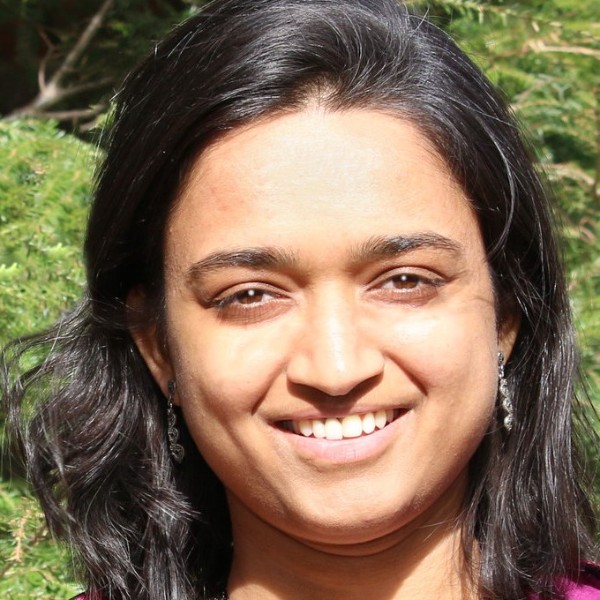
Five years moving institutional capital, then the training to value what that capital is chasing. The path that built my view, most recent first:
Harvard University
I earned my Master of Data Science & AI (3.9 GPA, Dean's List). Capstone: an ML framework for sovereign-bond portfolio optimization, built for Citibank New York, scored 100%.
Bentall Green Oak
I ran PE data science for Sun Life Global ($355B): $1.3B underwritten across data centers, self-storage, and multifamily, with AI screens that lifted the approved-deal hit rate 40%.
Scotiabank
I covered equity capital markets, corporate banking, and M&A across fintech, insurance, industrials, and retail in EMEA and the US.
Ontario Teachers' Pension Plan
I underwrote direct private investments at a $270B pension: infrastructure and real estate, plus a $1B commitment alongside AustralianSuper into the NIIF Master Fund.
University of Toronto
I earned my Master of Financial Economics, and with it the valuation toolkit: DCF, scenario weighting, sum-of-the-parts, comparables.
Saint Mary's University
I earned my Bachelor of Economics (Honours), finance major, mathematics minor. The grounding under everything after.
Financial Economics gives the discipline to model a business on its cash dynamics rather than its narrative. Data Science and AI give the inside view on what is hard, what is a commodity, and what is genuinely defensible in the technology being valued. I can read the 10-K, build the model, and defend a view on which technical claim in management commentary is signal versus marketing copy. Both sides are needed to do this work honestly.
I work across four languages, English and Hindi natively and French and Spanish at B2, which helps when diligence, management calls, and primary sources reach past English.
Brilliant technology and a brilliant investment are rarely the same sentence. The entire job is telling them apart.
Where capital should flow
The public markets run on stories, and most don't survive contact with cash flow. Deep tech is where that gap runs widest: the science is hard to evaluate, the horizons are long, and the distance between a convincing demo and a durable compounder is enormous. Capital should flow to the second kind, not the first.
Sell-side research carries structural conflicts; buy-side research sits behind paywalls most readers will never see past. That leaves a coverage gap where curious retail investors and serious enthusiasts are left to choose between shallow takes and silence. Independent research, grounded in primary sources and free of banking relationships, is one honest lever for pointing capital at substance instead of narrative.
This Library is the deliberate expression of that intersection. Each dashboard tries to answer one question: would I bet on this company, at this price, given what I know?